
How Much Does a Gravel Driveway Cost in West Michigan?
Gravel driveway costs depend on the size, existing conditions, materials, drainage and amount of site preparation required. This guide explains the key cost factors and realistic price ranges for West Michigan properties.
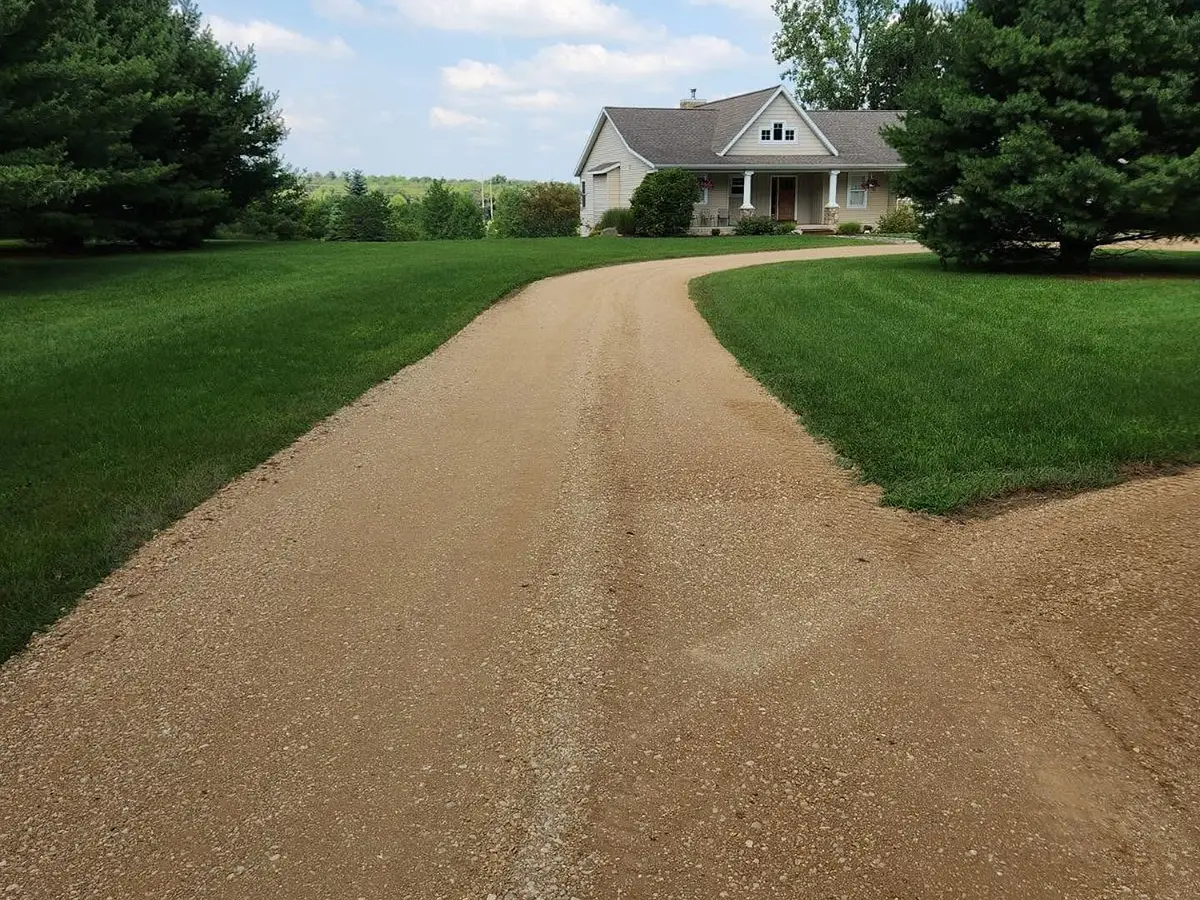
What Does a Gravel Driveway Cost?
The biggest question isn't just how long the driveway is. It's what has to happen underneath the gravel to build a driveway that performs properly.
Resurfacing an established driveway with a solid base can be relatively straightforward. Building a new driveway across undeveloped ground may require excavation, grading, base material, drainage and significantly more trucking and equipment time.
R&H looks at the actual driveway, existing conditions and what needs to be corrected before providing a project-specific estimate.
What Might Your Gravel Driveway Project Cost?
These examples provide general planning ranges for common driveway projects. They are not fixed prices or quotes. Driveway size, base condition, drainage, material quantities and site access can move an individual project below or above these ranges.
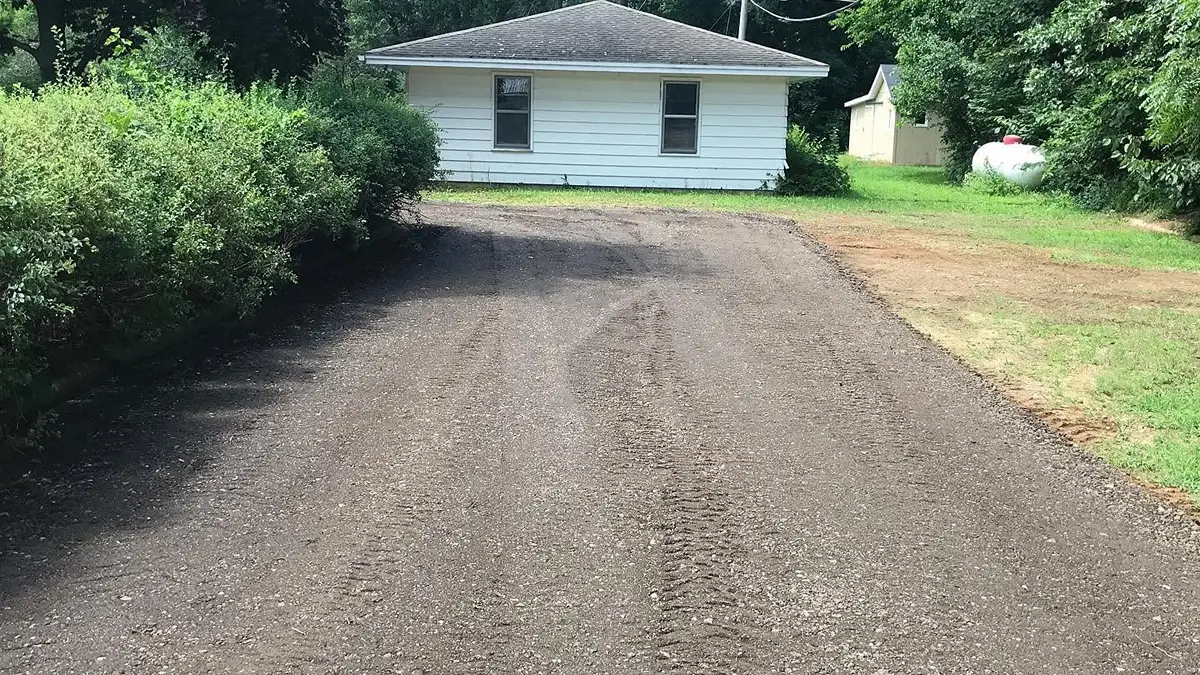
Gravel Driveway Resurfacing
An existing gravel driveway with a reasonably solid base that needs to be regraded and refreshed with new material. This may include correcting potholes, ruts and low areas before placing and grading new gravel.
Driveways requiring more material, significant reshaping or drainage corrections can exceed this range.
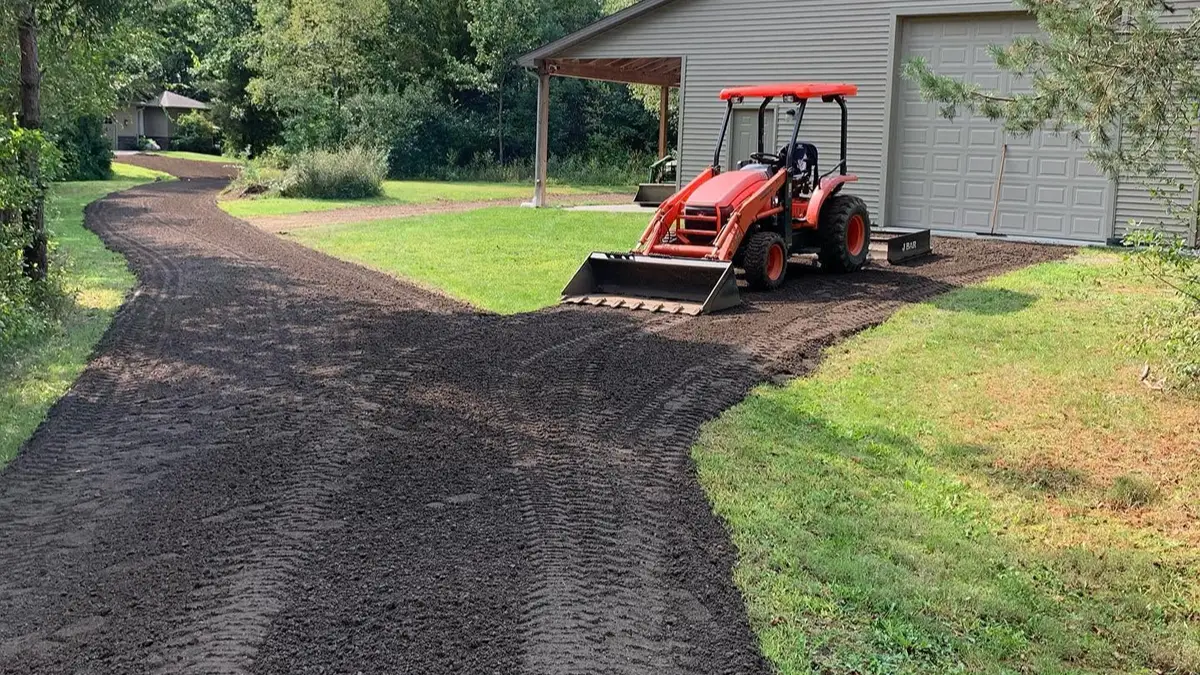
Driveway Repair & Rebuilding
A driveway with recurring potholes, deep ruts, washouts, standing water or sections that continue to fail. The project may require more than simply adding another layer of gravel.
Work can include reshaping the driveway, correcting low areas, rebuilding failed sections, adding base material and improving how water moves around or across the driveway.
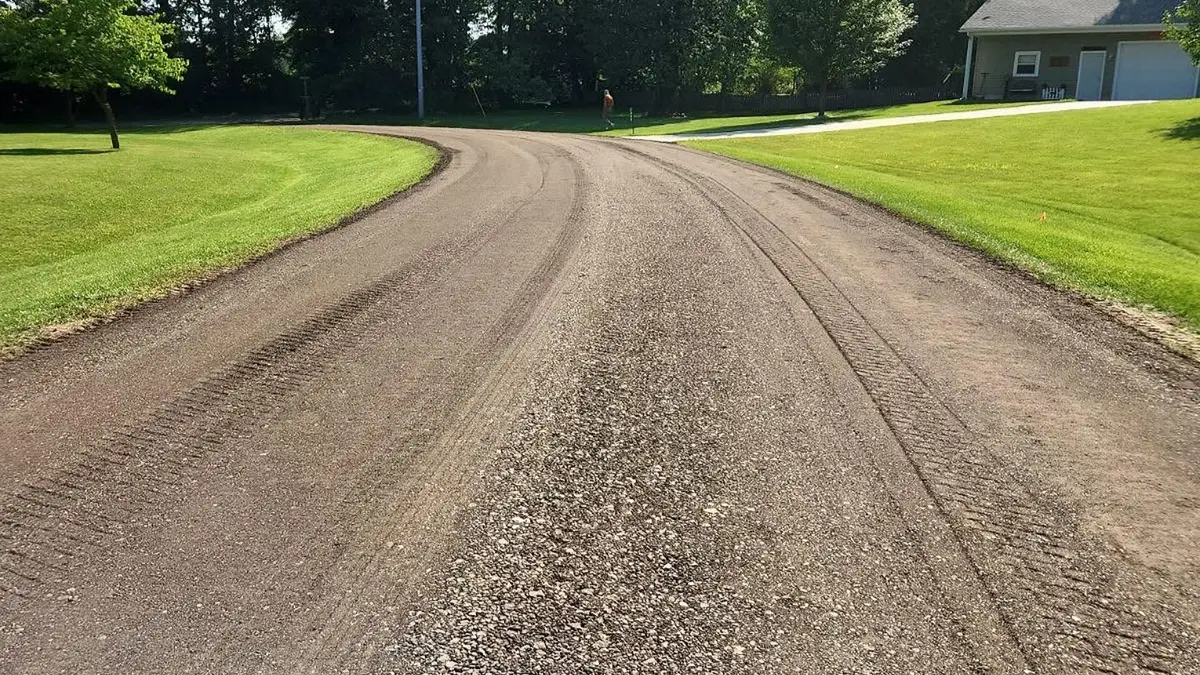
New Gravel Driveway Construction
Building a driveway where one doesn't already exist can involve excavation, preparing and shaping the subgrade, installing base material, managing drainage and placing the finished gravel surface.
Long rural driveways, difficult terrain, wet ground, culverts, extensive excavation or large amounts of imported material can increase the cost substantially.
Two driveways of the same length can have very different costs. The existing base, width, terrain, drainage, material depth, truck access and amount of material required all affect the final scope of work.
Pricing examples are provided for general project planning only and are not quotes or guaranteed price ranges. Every property is different. Actual pricing is based on site conditions and the work required for your specific driveway.
6 Factors That Affect Gravel Driveway Cost
Gravel itself is only part of the project. These are some of the biggest factors R&H considers when evaluating a driveway.
Driveway Size
Length and width determine how much ground needs to be prepared and how much base and surface material must be delivered, placed and graded.
Existing Base
A driveway with a solid existing base may only need reshaping and resurfacing. A soft, thin or failing base can require considerably more work.
Material & Depth
The type of aggregate, amount required and finished depth all affect material and trucking costs. New driveways generally require more material than a resurfacing project.
Grading & Terrain
Flat, accessible ground is different from a sloped or uneven driveway that needs significant reshaping, excavation or grade correction.
Drainage
Water running down, across or underneath a driveway is one of the biggest causes of recurring failure. Drainage corrections can add work but may be necessary for a lasting repair.
Access & Trucking
Gravel is heavy. The number of loads required, distance material must be moved and whether trucks and equipment can easily access the property all affect the project.
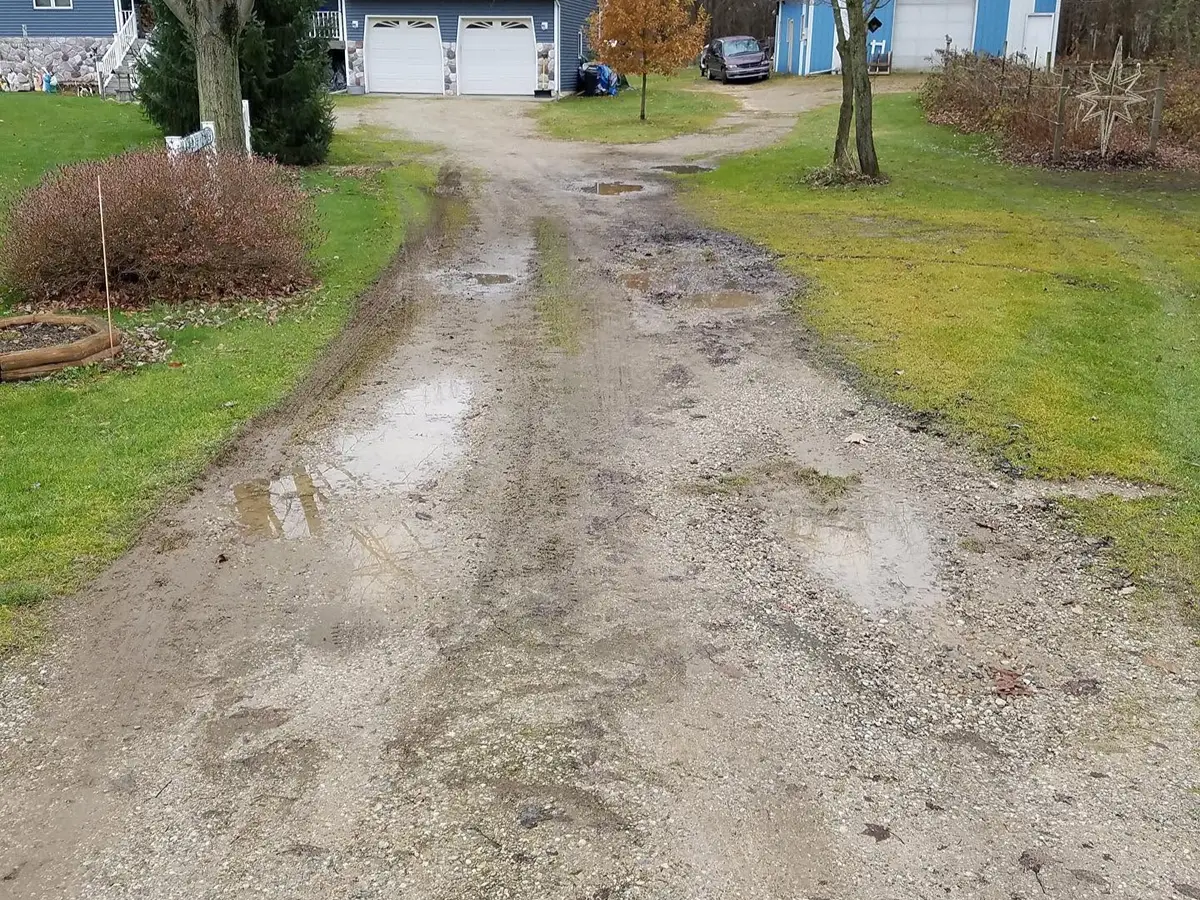
Why Do Gravel Driveway Problems Keep Coming Back?
Adding fresh gravel can make a driveway look better, but it won't necessarily fix the reason the driveway is failing.
Recurring potholes, ruts, washouts and soft areas can point to problems with the base, grade or drainage. If water continues to collect in the same place or flow down the driveway during heavy rain, new material can eventually develop the same problems.
That's why R&H looks at how the driveway is performing before deciding whether it simply needs resurfacing or whether sections should be rebuilt or reshaped.
Does Your Driveway Just Need More Gravel?
Sometimes it does. Sometimes adding more material only covers the problem temporarily.
Resurfacing May Be Enough
If the driveway has a good base, drains reasonably well and mainly needs fresh material, reshaping and resurfacing may be the most practical approach.
Failed Areas May Need Rebuilding
Deep potholes, soft areas and sections that repeatedly rut may indicate problems below the surface that should be addressed before adding finished material.
Water May Need to Be Corrected
If runoff is washing across the driveway, collecting in low spots or flowing directly down the driving surface, grading or drainage work may be part of the solution.
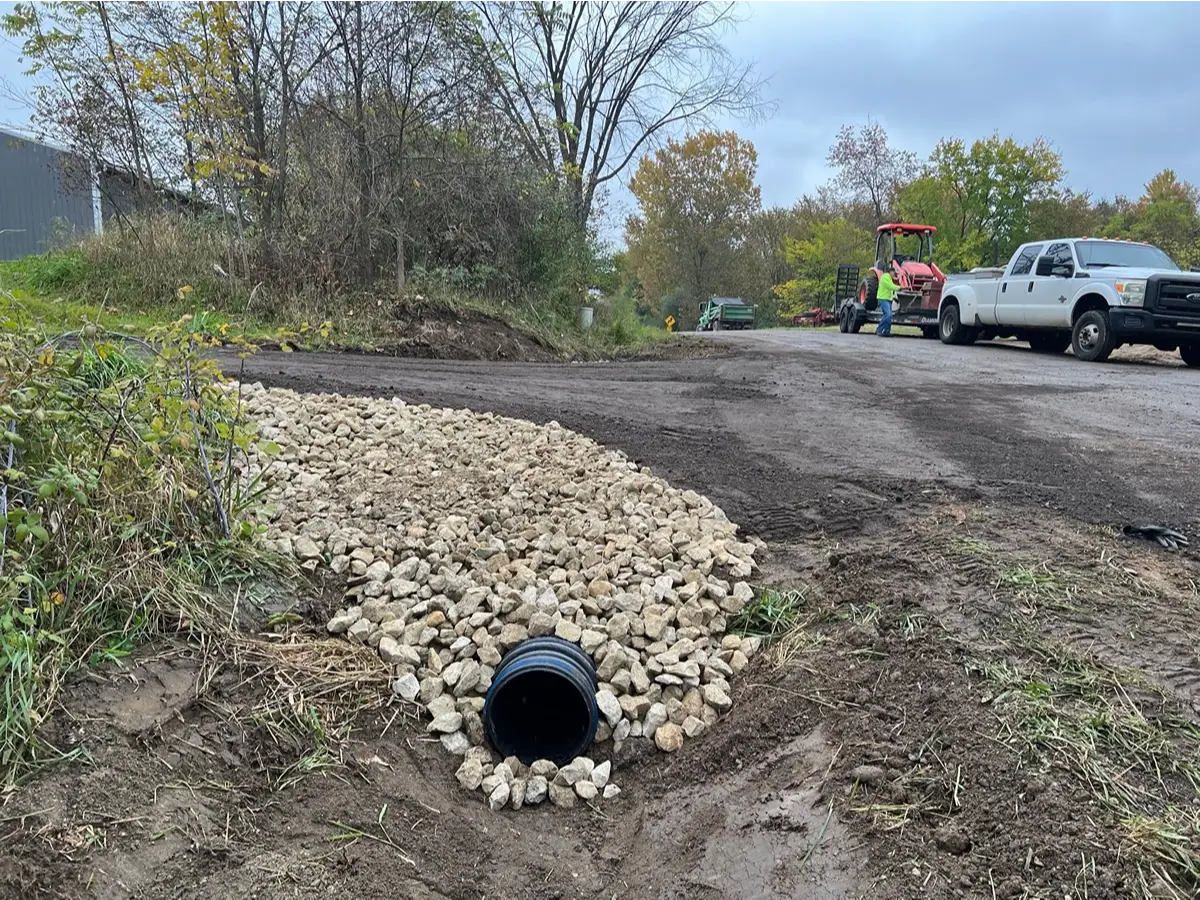
Drainage Can Make or Break a Gravel Driveway
Many driveway problems become obvious after heavy rain. Water may collect in potholes, wash material off the surface, create ruts or soften the ground underneath the driveway.
Depending on the property, correcting the problem may involve reshaping the driveway, improving the crown or slope, directing runoff away from the driving surface, correcting low areas or installing additional drainage.
Spending money on drainage can increase the initial project cost, but repeatedly replacing gravel that continues to wash away isn't much of a solution.
What Goes Into Building a New Gravel Driveway?
A new driveway is a site-work project, not simply a load of gravel spread across the ground.
- Determine the driveway route and access
- Clear vegetation or unsuitable material
- Excavate and prepare the subgrade where required
- Establish the proper driveway elevation and shape
- Address drainage and water movement
- Install appropriate base material
- Place and grade the finished aggregate
- Tie the driveway into the surrounding property
If the driveway is part of a new-home project, tell R&H about the complete site plan. Driveway access, lot clearing, excavation, septic, drainage and grading often affect one another and are better considered together.
What R&H Looks at Before Pricing Your Driveway
The more R&H understands about the driveway and the problems you're experiencing, the easier it is to recommend the right scope of work.
- Approximate driveway length and width
- Existing driveway material
- Condition of the existing base
- Potholes, ruts or soft areas
- Washouts or erosion
- Standing water or drainage problems
- Driveway slope and surrounding terrain
- Access for trucks and equipment
- Areas that need widening or expansion
- Parking pads or turnaround areas
- Type and quantity of material required
- How the driveway is used
When requesting an estimate, tell us where the property is located, approximately how long the driveway is and what problems you're trying to solve. Photos of potholes, washouts, standing water or failed areas can also be helpful.
Gravel Driveway Cost FAQs
How much does a gravel driveway cost in West Michigan?
How much does it cost to resurface a gravel driveway?
Is it cheaper to repair a gravel driveway or replace it?
Why do potholes keep coming back in my gravel driveway?
Can R&H fix a gravel driveway that keeps washing out?
What is the best material for a gravel driveway?
Can you build a new driveway for a new home?
How do I get an accurate gravel driveway estimate?
Get an Estimate for Your Gravel Driveway
Tell us about your driveway, the problems you're experiencing and where the property is located. R&H Tractor Services provides gravel driveway installation, resurfacing, grading and repair throughout Hastings and surrounding West Michigan communities.